Mexico · United States · Canada · Asia · Global Executive Strategic Brief | Week 25 | 21-06-2026
I. Top Article: Trump-China Agreements Move from Summit Optics to Managed Trade Execution
Sources: [1], [2], [3], [5]
Hard Data:
- 02-06-2026 / 03-06-2026: USTR opened a public comment process on the U.S.-China Board of Trade, seeking input on non-sensitive products that could benefit from tariff modifications; comments are due 10-07-2026 [1].
- Reuters reported that officials had described the initial Board of Trade universe as roughly USD 30 billion in goods on each side, although USTR did not include that figure in the notice [1].
- China has signaled tariff cuts and market-access improvements for U.S. agricultural trade after the Trump-Xi summit, but details remain incomplete and implementation must still be verified by product and timing [2].
- A U.S. business group reported on 10-06-2026 that some rare earth elements from China remain nearly unobtainable despite the broader Trump-Xi understanding on critical minerals [3].
- On 17-06-2026, the G7 agreed to a critical minerals alliance designed to reduce reliance on any one non-G7 supplier for rare earths and permanent magnets to below 60% by 2030 [5].
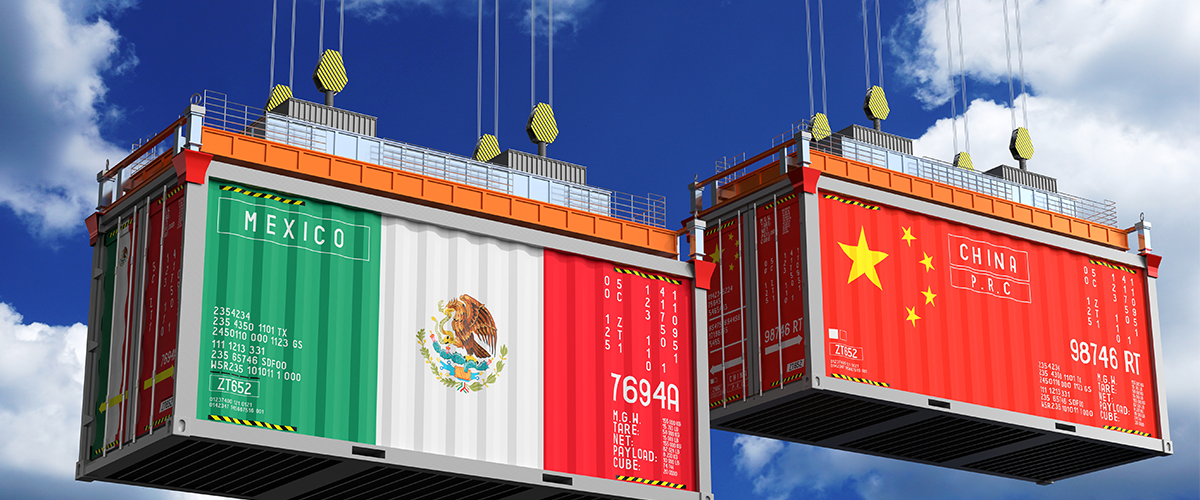
The key value of the Trump-China track this week is that the relationship is not returning to broad free trade. It is moving into a product-by-product management model. The Board of Trade will likely separate goods that can circulate with lower tariff friction from goods that remain exposed because of national security, supply chain resilience or strategic-minerals concerns.
This matters for Mexico because Chinese inputs are not disappearing from North American supply chains. What is changing is the filter applied to them. Inputs considered non-sensitive may recover some commercial oxygen, while strategic materials, rare earths, magnets, advanced electronics and dual-use components may remain under tight scrutiny.
SEMUDMEX 360° View:
The Trump-China agreements should be followed weekly not as a normalization story, but as a managed-trade map. Companies must distinguish between ordinary Chinese supply, politically tolerated supply and strategically restricted supply.
II. USMCA Review: Agriculture and Energy Become the Next Negotiating Front
Sources: [4]
Hard Data:
- 16-06-2026 and 17-06-2026: U.S. and Mexican negotiators met in Washington for a second round focused on agriculture and energy [4].
- 01-07-2026: The three USMCA countries need to decide whether to extend the pact as-is or recommend changes; revisions will not be completed by that date, so the process is expected to start the treaty clock toward a 10-year termination window while negotiations continue [4].
- Canada and Mexico accounted for more than USD 58.6 billion in U.S. farm exports in 2025, representing more than one-third of global U.S. agricultural exports [4].
- U.S. agriculture stakeholders are pressing for stronger provisions on genetically modified corn, ethanol access in Mexico and improved dairy access to Canada [4].
- A third U.S.-Mexico round is scheduled for the week of 20-07-2026 in Mexico City [4].
This section should not repeat the general USMCA review narrative. The new element is that the talks are moving into operational sectors that matter directly to trade flows: agriculture, energy, biotech corn, ethanol and the treatment of private and foreign participation in Mexico’s energy sector.
SEMUDMEX 360° View:
The USMCA review is becoming a practical negotiation over market access and regulatory execution. For Mexico-based operators, the relevant issue is not only tariff preference, but the conditions attached to keeping North American trade predictable.
III. Critical Minerals: China Pressure Pushes the G7 Toward Supply-Chain Intervention
Sources: [3], [5]
Hard Data:
- China controls approximately 90% of processed rare earth production, according to Reuters coverage of the G7 minerals initiative [5].
- The G7 agreed to build mechanisms with the IEA to monitor markets and issue early warnings on critical minerals [5].
- The initiative starts with lithium and nickel and is expected to add five new minerals each year, with a focus on rare earth elements [5].
- Countries have announced 195 projects since the start of 2026 with EUR 64 billion, equivalent to about USD 74 billion, in investment [5].
- U.S. firms impacted by Chinese restrictions are seeking alternative supplies, but the U.S. business group warned that diversification could take years [3].
Critical minerals are now a direct trade-policy issue, not only an industrial input issue. The G7 response shows that supply security is being treated through stockpiling, early-warning systems, finance, subsidies, quotas and potential trade instruments.
SEMUDMEX 360° View:
For importers and manufacturers, critical minerals require a different compliance lens: source verification, supplier continuity, geopolitical exposure and replacement feasibility must be documented before disruption occurs.
IV. Ormuz: Final Brief Note
Sources: [7], [8], [9]
Hard Data:
- 15-06-2026: Reuters reported that oil prices settled down after President Trump said the United States and Iran signed an MOU aiming to end the Iran war and reopen the Strait of Hormuz [7].
- Brent crude fell 4.76% to USD 83.17 per barrel, while WTI fell 4.87% to USD 80.75 on the expectation of resumed flows [7].
- The Strait of Hormuz had been closed for more than three months and is a chokepoint for roughly one-fifth of the world’s oil and LNG supplies [7].
- Reuters cited more than 14 million barrels per day of oil output shut, roughly 14% of world demand, and noted that full normalization may take weeks, months or even years [7].
- 20-06-2026: Three Indian-flagged tankers carrying more than 860,000 metric tons of oil safely transited the strait; the U.S. military also said traffic continued to flow despite Iranian closure claims [8], [9].
The commercial relevance is that the shock premium has begun to unwind, but normalization is not immediate. Insurance, vessel positioning, producer restarts and inventory rebuilding still matter.
SEMUDMEX 360° View:
The Ormuz affected prices, inventories, vessel flows and production capacity, but the topic is no longer the central risk driver if traffic continues.
V. EU-U.S. Trade Deal: Tariff Peace Through Managed Commitments
Sources: [6]
Hard Data:
- 16-06-2026: The European Parliament approved cutting duties on many U.S. goods to fulfill the EU side of a Trump-era framework deal [6].
- The agreement contemplates the EU removing import duties on U.S. industrial goods while the U.S. implements broad 15% tariffs on most EU goods by 24-07-2026 [6].
- The EU legislation expires at the end of 2029 and includes safeguards allowing suspension of concessions if the U.S. breaches the terms [6].
This point reinforces the same global pattern seen in the Trump-China track: trade is becoming negotiated, conditional and monitored. Even among allies, tariff peace now depends on managed commitments rather than automatic liberalization.
SEMUDMEX 360° View:
The relevant signal is not Europe itself, but the model: major economies are building trade stability through conditional arrangements, deadlines, safeguards and tariff floors. That model can influence how companies price risk across corridors.
VI. Executive Conclusion
The strongest message for this edition is that global trade is entering a phase of selective stabilization. Trump-China agreements are not eliminating friction; they are organizing it. USMCA talks are moving into detailed sectoral bargaining. Critical minerals are becoming a G7-level supply-security agenda. Ormuz is reopening, but its three-month disruption exposed how quickly energy logistics becomes a trade variable. The common thread is clear: companies will need stronger documentation, corridor-specific strategies and more disciplined monitoring of political agreements that now shape daily commercial execution.
Sources
[1] Reuters, USTR seeks comment on possible US-China tariff cuts under Board of Trade, 03-06-2026. https://www.reuters.com/world/us/ustr-seeks-comment-possible-us-china-tariff-cuts-under-board-trade-2026-06-03/
[2] Reuters, China signals tariff cuts and farm-market access after Trump-Xi summit, 16-05-2026 / 20-05-2026 coverage. https://www.reuters.com/world/china/china-signals-tariff-cuts-advances-farm-market-access-after-trump-xi-summit-2026-05-16/
[3] Reuters, US business group says some critical minerals are nearly unobtainable from China, 10-06-2026. https://www.reuters.com/world/china/us-business-group-says-some-critical-minerals-are-nearly-unobtainable-china-2026-06-10/
[4] Reuters, US, Mexican officials discuss agriculture, energy as Trump casts doubt on trade deal, 16-06-2026. https://www.reuters.com/world/china/us-mexican-officials-discuss-agriculture-energy-trump-casts-doubt-trade-deal-2026-06-16/
[5] Reuters, G7 sets up critical minerals alliance, platform to cut reliance on China, 17-06-2026. https://www.reuters.com/world/europe/g7-sets-up-critical-minerals-alliance-crisis-platform-2026-06-17/
[6] Reuters, EU lawmakers approve US trade deal to avert tariff conflict, 16-06-2026. https://www.reuters.com/business/european-parliament-votes-approve-eu-us-trade-deal-2026-06-16/
[7] Reuters, Oil settles at three-month low after Trump says deal signed to end Iran war, 15-06-2026. https://www.reuters.com/business/energy/oil-slips-over-4-after-us-iran-reach-peace-deal-reopen-strait-hormuz-2026-06-14/
[8] Reuters, US forces monitoring Strait of Hormuz to ensure it stays open, 20-06-2026. https://www.reuters.com/world/middle-east/us-forces-monitoring-strait-hormuz-ensure-it-stays-open-2026-06-20/
[9] Reuters, Three Indian-flagged oil tankers clear Strait of Hormuz, 20-06-2026. https://www.reuters.com/world/india/three-indian-flagged-oil-tankers-clear-strait-hormuz-minister-says-2026-06-20/