Mexico · United States · Canada · Asia · Global
Executive Strategic Brief | Week 23 | 07-06-2026
I. Top Article – The U.S.-China Board of Trade Turns Tariff Relief into Product-Level Managed Trade
Sources: [1], [2]
Hard Data:
- 02-06-2026: USTR opened a public comment process for the U.S.-China Board of Trade, described as a government-to-government mechanism to manage bilateral trade on an ongoing basis [1].
- 02-06-2026: USTR requested comments on specific types of non-sensitive products that could benefit from tariff modifications on each side, while preserving tariff tools for economic and national security [1].
- 10-07-2026: Deadline for initial public comments; rebuttals or responses may be submitted by 27-07-2026 [1].
- Reuters reported that the process is tied to the Trump-Xi trade framework and to the identification of goods that may receive lower tariffs without entering sensitive strategic categories [2].
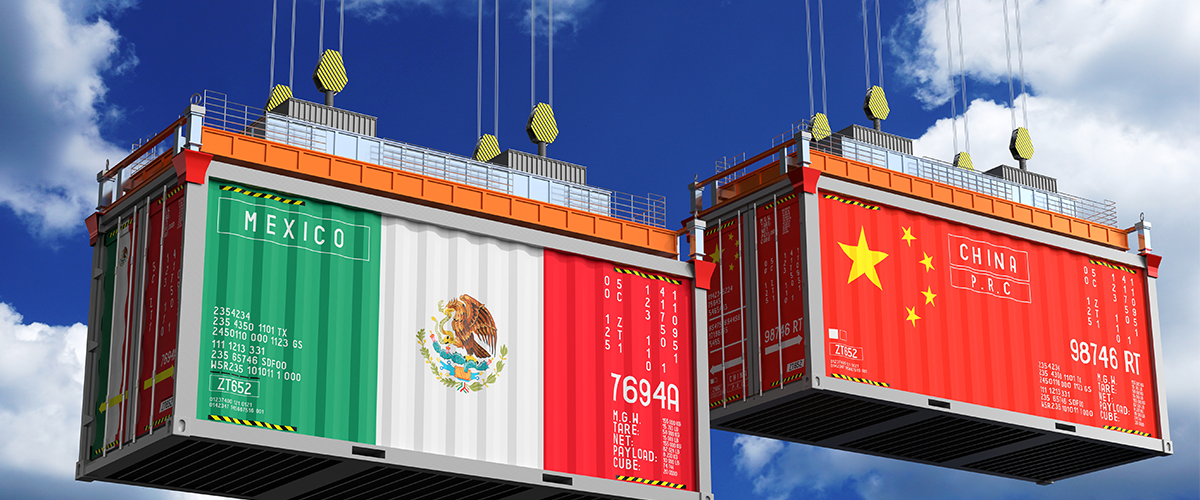
This is the strongest development for the week because it moves the Trump-Xi commercial understanding from political announcement to administrative execution. The relevant point is not that the United States and China are returning to broad free trade; it is that both governments are creating a filtered channel for specific products that may circulate with lower tariff friction.
The Board of Trade structure confirms a shift toward category-by-category commercial permission. Non-sensitive goods may receive relief, while strategic inputs, critical minerals, defense-adjacent technologies, supply-chain chokepoints and national-security-linked products remain subject to a harder control logic.
For Mexico-based operators, this creates a new analytical layer. China exposure can no longer be evaluated only by supplier, country of origin or price. It must be reviewed by product category, tariff line, sensitivity profile, contractual pass-through provisions and substitution capacity.
SEMUDMEX 360° View: The operational risk is misreading selective tariff relief as normalization. The more precise reading is managed interdependence: some China-linked flows may reopen, but only under a product-level filter that can change documentation, pricing and sourcing decisions quickly.
II. USMCA – The Review Has Entered a Formal Negotiation Calendar
Sources: [3], [4]
Hard Data:
- 27-05-2026: USTR announced three U.S.-Mexico bilateral rounds related to the first joint review of the USMCA [3].
- 28-29-05-2026: The first round took place in Mexico City, focused on economic security and rules of origin for key industrial goods [3], [4].
- 16-17-06-2026: The second round will be held in Washington, D.C., with agriculture and level-playing-field issues added to the agenda [3].
- Week of 20-07-2026: The third round is scheduled for Mexico City [3].
- 29-05-2026: USTR stated that the first round also addressed steel and aluminum, economic security, and regulatory compatibility in sectors such as medical devices, pharmaceuticals and cosmetic products [4].
This item should remain concise because the bulletin has already tracked the USMCA tightening trend. The new element is that the process now has dates, venues and a technical sequence. The negotiation is no longer an abstract future review; it has become an active workstream.
The non-automotive angle is important. While rules of origin remain central, USTR also highlighted regulatory compatibility in medical devices, pharmaceuticals, cosmetic products and other sectors. That broadens the operational relevance beyond one industry and makes the review important for importers, distributors and manufacturers with regulated supply chains.
The practical implication is that companies should treat June and July as a preparation window for origin files, supplier declarations, value records, technical dossiers and contract language tied to tariff changes or regulatory requirements.
SEMUDMEX 360° View: The USMCA review is becoming an execution test. Companies do not need to wait for a treaty rewrite to be affected; technical rounds can already shape enforcement priorities, documentation expectations and negotiation leverage.
III. Forced Labor Section 301 – Compliance Becomes a Tariff Frontier
Sources: [5], [6], [7]
Hard Data:
- 02-06-2026: USTR determined under Section 301 that acts, policies and practices of 60 economies related to forced-labor import prohibitions are actionable [5].
- USTR’s report states that the investigations covered economies from which 99.40% of U.S. imports are shipped [6].
- The report identifies 54 economies as failing to impose a legal prohibition on forced-labor goods and six economies, including Mexico, Canada, the European Union, Indonesia, Ecuador and Pakistan, as failing to effectively enforce such a prohibition [6].
- Reuters reported that the proposed tariff response could reach up to 12.5% on imports from certain economies, with trading partners rejecting the U.S. allegations [7].
This development deserves a prominent but disciplined place in the bulletin because it introduces a new enforcement logic. Tariff exposure is no longer linked only to origin, classification, valuation or strategic goods; it can also arise from how a country prohibits or enforces prohibitions against forced-labor products.
The relevance for Mexican and regional operators is documentary. Even when a company does not knowingly use forced labor, U.S. enforcement pressure may require stronger supplier mapping, chain-of-custody evidence, procurement controls, audit trails and contract representations.
This is also a reputational issue. Labor traceability is becoming a trade-access condition. Companies that cannot prove clean sourcing may face higher friction even if their goods are commercially ordinary.
SEMUDMEX 360° View: The compliance frontier is shifting from customs paperwork to supply-chain integrity. The next competitive advantage will be the ability to prove not only what a product is and where it comes from, but also how it was produced.
IV. Ormuz – Energy Quotas Do Not Solve Physical Logistics Constraints
Sources: [8]
Hard Data:
- 07-06-2026: Reuters reported that OPEC+ approved a fourth consecutive monthly output-quota increase after the closure of the Strait of Hormuz [8].
- Seven members agreed to raise July targets by 188,000 barrels per day [8].
- Reuters reported that actual OPEC+ output fell from 42.77 million barrels per day in February to 33.19 million barrels per day in April [8].
- The same report noted that the quota increase has limited practical effect while Gulf export routes remain constrained [8].
Energy remains relevant this week, but the angle should be operational, not repetitive. The new point is the gap between announced supply and deliverable supply. A production quota does not lower trade risk if the export corridor remains constrained.
For importers, exporters and logistics planners, the risk is visible in freight, insurance, fuel surcharges, inventory buffers and supplier timing. It also affects customs valuation when transportation and energy-linked costs move faster than commercial documentation.
The market may announce more oil, but trade operations need physical flow. That distinction should guide the bulletin’s treatment of the topic.
SEMUDMEX 360° View: Ormuz should be read as a logistics constraint embedded inside energy policy. The question is not only how much supply producers authorize, but how much can move, at what cost, and under what insurance and timing conditions.
V. Physical Trade Flows – Lower U.S. Container Imports Confirm Operational Pressure
Sources: [9], [10]
Hard Data:
- 08-05-2026: Reuters reported that U.S. containerized imports fell 5.5% year over year in April, to just over 2.27 million TEUs [9].
- Descartes reported April 2026 U.S. container imports of 2,277,965 TEUs, down 3.2% from March and 5.5% from April 2025 [10].
- Reuters reported that imports from China fell 15.3% year over year, reflecting sensitivity to tariff policy and geopolitical risk [9].
This is not the freshest regulatory item, but it is useful as a market signal because it validates the operating environment described in the prior sections. Tariff uncertainty, China exposure, energy disruption and administrative filtering are not only policy issues; they are visible in physical trade movement.
The reduction in container imports should be read together with the U.S.-China Board of Trade and forced-labor Section 301 actions. One side of the system is designing selective relief, while the other shows reduced physical momentum. That combination points to a more cautious importer base.
For SEMUDMEX clients and partners, the relevant action is to align inventory strategy with compliance strategy. Lower cargo volumes do not automatically mean lower risk; they may indicate more selective ordering, delayed procurement or corridor substitution.
SEMUDMEX 360° View: The system is under financial, legal and operational pressure at the same time. Companies should treat lower volumes as a warning signal to review sourcing concentration, documentation capacity and cost-pass-through mechanisms.
Sources
[1] USTR. “USTR Seeks Public Comment on the Scope and Operation of a Mechanism to Promote Balanced and Reciprocal Trade with China.” 02-06-2026. https://ustr.gov/about/policy-offices/press-office/press-releases/2026/june/ustr-seeks-public-comment-scope-and-operation-mechanism-promote-balanced-and-reciprocal-trade-china
[2] Reuters. “USTR seeks comment on possible U.S.-China tariff cuts under Board of Trade.” 03-06-2026. https://www.reuters.com/world/us/ustr-seeks-comment-possible-us-china-tariff-cuts-under-board-trade-2026-06-03/
[3] USTR. “The United States and Mexico Announce Series of Bilateral Negotiating Rounds Related to the First Joint Review of the USMCA.” 27-05-2026. https://ustr.gov/about/policy-offices/press-office/press-releases/2026/may/united-states-and-mexico-announce-series-bilateral-negotiating-rounds-related-first-joint-review
[4] USTR. “The United States and Mexico Conclude First Bilateral Round Related to the Joint Review of the USMCA.” 29-05-2026. https://ustr.gov/about/policy-offices/press-office/press-releases/2026/may/united-states-and-mexico-conclude-first-bilateral-round-related-joint-review-usmca
[5] USTR. “USTR Makes Findings and Proposes Action in 60 Section 301 Investigations Relating to Failures to Take Action on Trade in Forced Labor Goods.” 02-06-2026. https://ustr.gov/about/policy-offices/press-office/press-releases/2026/june/ustr-makes-findings-and-proposes-action-60-section-301-investigations-relating-failures-take-action
[6] USTR. “Section 301 Investigations Relating to Forced Labor Goods.” Report. 02-06-2026. https://ustr.gov/sites/default/files/files/Press/Releases/2026/USTR%20Report%20Sec%20301%20FL%20301%206-2-26%20FINAL%20for%20upload.pdf
[7] Reuters. “U.S. proposes additional tariffs on imports from 60 economies over forced labor.” 03-06-2026. https://www.reuters.com/world/china/us-proposes-additional-tariffs-imports-60-economies-over-forced-labor-2026-06-03/
[8] Reuters. “OPEC+ approves fourth oil output quota hike since Hormuz closure.” 07-06-2026. https://www.reuters.com/business/energy/opec-set-fourth-oil-quota-hike-since-hormuz-closure-sources-say-2026-06-07/
[9] Reuters. “U.S. container imports fell 5.5% in April on trade and geopolitical risks, Descartes says.” 08-05-2026. https://www.reuters.com/world/china/us-container-imports-fell-55-april-trade-geopolitical-risks-descartes-says-2026-05-08/
[10] Descartes. “April U.S. Container Imports Ease as Trade Uncertainty and Geopolitical Risks Persist.” May 2026. https://www.descartes.com/resources/knowledge-center/global-shipping-report-April-2026-container-imports-ease